Source Smart Farming Wireless Pressure Transmitter for Irrigation, Greenhouse, and Water Systems
Find 30 Smart Farming Wireless Pressure Transmitter options with varying accuracy, output signals, and communication standards. Compare specifications from suppliers in China to select the right device for agricultural monitoring needs.
Key considerations
Products List

Advanced Wireless Pressure Transmitter for Industrial Smart Applications
$100.00 - $134.00
MOQ: 1 pieces

Reliable Wireless Pressure Transmitters with Smart Technology for Easy Use
$100.00 - $134.00
MOQ: 1 pieces


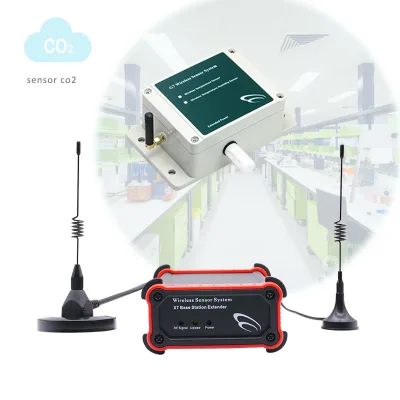
Advanced Crop Monitoring Sensor for Smart Farming Irrigation Solutions
$10.00 - $15.00
MOQ: 100 Square Meters

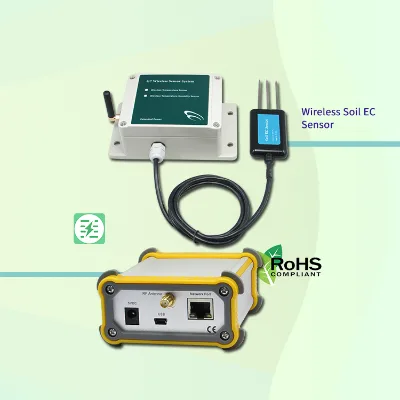
Wireless Soil Moisture Sensor for Smart Farm Irrigation Systems
$10.00 - $15.00
MOQ: 100 Square Meters

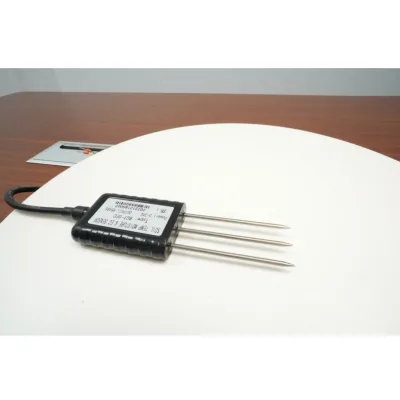
Remote Monitoring Sensor for Automated Farm Irrigation Control Systems
$10.00 - $15.00
MOQ: 100 Square Meters




Comprehensive Sourcing Guide
Strategic Sourcing Guide for Smart Farming Wireless Pressure Transmitters
The integration of wireless pressure transmitters into smart farming ecosystems represents a critical advancement in agricultural automation. These devices enable real-time monitoring of irrigation systems, hydraulic machinery, and soil moisture management, allowing for precise resource allocation and predictive maintenance. For procurement professionals, sourcing these components requires a disciplined approach that balances technical compatibility, regulatory compliance, and supply chain reliability. The following guide outlines the essential factors for evaluating wireless pressure transmitters, specifically focusing on the capabilities and constraints observed in current market offerings.
Technical Architecture and Sensor Performance
The core functionality of a wireless pressure transmitter in an agricultural setting relies on the convergence of sensing technology and wireless communication protocols. Buyers must first distinguish between the sensing mechanism and the transmission method. In the observed market data, devices utilize diffused silicon pressure transmitters as the primary sensing element. This technology is favored for its robustness and ability to measure liquid media, which is common in irrigation and hydroponic systems. The sensing element converts physical pressure into an electrical signal, which is then processed and transmitted wirelessly.
Accuracy is a paramount specification for agricultural applications where small deviations can lead to significant crop loss or equipment damage. Market observations indicate that accuracy levels vary, with options available at 0.1% F.S, 0.2% F.S, and 0.5% F.S. Procurement teams must align these accuracy tiers with the specific tolerance requirements of their farming infrastructure. For high-precision irrigation control, the 0.1% F.S option may be necessary, whereas general tank level monitoring might suffice with 0.5% F.S.
The wireless communication architecture is equally critical. The devices operate within the ISM (Industrial, Scientific, and Medical) bands, specifically utilizing frequencies such as 433 MHz, 868 MHz, and 915 MHz. These frequencies are selected for their balance between range and penetration capabilities in rural environments. The communication standard adheres to IEEE 802.15.4G, which supports low-power, low-data-rate wireless personal area networks. This standard ensures that the devices can operate for extended periods on battery or low-voltage DC power without frequent recharging. The average communication current is observed at 100mA at 3.6VDC, a figure that buyers should use to calculate battery life expectations for remote sensors.
Environmental Durability and Operational Limits
Smart farming equipment operates in harsh environments characterized by fluctuating temperatures, high humidity, and exposure to dust or water. The physical robustness of the transmitter is therefore a non-negotiable criterion. The observed products feature an IP rating that suggests protection against ingress, though the specific rating value requires verification against the manufacturer's datasheet for the specific model. The housing is typically constructed from stainless steel, providing resistance to corrosion from fertilizers, pesticides, and constant water exposure.
Temperature tolerance is another critical factor. Agricultural sensors must function reliably during both freezing winters and scorching summers. The operational temperature range for the observed units spans from -10°C to 60°C, which covers most temperate climates. However, for extreme environments, buyers should verify if the device supports a wider range, as some specifications list a broader measurement range of -50°C to 120°C. The ambient temperature range is noted as -20°C to 85°C, indicating the limits within which the device electronics can remain stable.
Humidity resistance is equally important, as irrigation systems often create high-humidity microclimates. The devices are rated for ambient humidity up to 80% Rh, but some specifications suggest a measurement range up to 95% Rh. Procurement teams must ensure that the selected unit's humidity tolerance exceeds the maximum expected environmental conditions of the deployment site to prevent sensor drift or failure.
Compliance, Certification, and Regulatory Standards
Navigating the regulatory landscape is essential for importing and deploying electronic equipment across different regions. The primary certification observed in the market is the CE mark, which indicates compliance with European Union safety, health, and environmental protection requirements. For buyers targeting markets in Europe or regions that recognize CE standards, this is a baseline requirement. However, reliance on a single certification is insufficient for global procurement.
Buyers must verify if the device complies with local radio frequency regulations. Since the devices operate on ISM bands (433, 868, 915 MHz), they must adhere to the specific frequency allocations and power limits of the destination country. The IEEE 802.15.4G standard provides a framework for interoperability, but local regulatory bodies may have additional mandates regarding spectrum usage. Additionally, the product's electrical safety must align with local standards, particularly regarding the power supply requirements. The observed units support a power supply of 24VDC, with a range of 14VDC to 36VDC, which is a common industrial standard but must be matched with the farm's existing power infrastructure.
Cost Drivers and Procurement Economics
The total cost of ownership for wireless pressure transmitters extends beyond the unit price. The observed price range in the market spans from $10 to $450 USD, a significant variance that reflects differences in accuracy, build quality, and feature sets. Several factors drive these costs. First, the accuracy tier is a primary cost driver; units with 0.1% F.S accuracy command a premium over those with 0.5% F.S. Second, the communication range and antenna design influence pricing, with SMA antenna interfaces offering better connectivity options at a higher cost.
Minimum Order Quantity (MOQ) is another economic factor. The market data indicates an MOQ range of 1 to 100 units. For small-scale pilot projects or specific retrofitting needs, suppliers offering an MOQ of 1 allow for low-risk testing. Conversely, large-scale farm automation projects may benefit from bulk purchasing to reduce the per-unit cost, though this requires a commitment to the 100-unit threshold. Buyers should also consider the packaging and shipping costs, as the single package size is approximately 28x23x23 cm with a gross weight of 3.5 kg. These dimensions and weight impact logistics expenses, particularly for international shipping from the origin point in Shaanxi, China.
Supplier Evaluation and Customization Capabilities
Selecting the right supplier involves more than comparing technical specs; it requires assessing the supplier's ability to support the buyer's specific operational needs. The market data highlights that customization is available, with suppliers offering OEM (Original Equipment Manufacturer) and ODM (Original Design Manufacturer) support. This capability is crucial for buyers who need to integrate the transmitters into proprietary control systems or require custom branding for their agricultural equipment.
When evaluating suppliers, buyers should verify the production process. The observed units utilize a ceramics production process for the sensing element, which enhances stability and longevity. Buyers should request documentation confirming this process to ensure the supplier maintains quality control standards. Furthermore, the warranty period is a key indicator of supplier confidence. A standard one-year warranty is observed, but buyers should negotiate extended terms for large deployments to mitigate long-term risk.
The "Place of Origin" is listed as Shaanxi, China, a region known for its industrial manufacturing base. While this provides access to competitive pricing, buyers must conduct due diligence on the specific factory's quality management systems. Requesting third-party audit reports or visiting the facility can provide assurance that the production standards meet the buyer's requirements.
Quality Control and Testing Protocols
To ensure the reliability of wireless pressure transmitters in the field, a robust quality control (QC) protocol is essential. Buyers should implement a multi-stage testing strategy that includes incoming inspection, functional testing, and environmental stress testing. The response time of the devices, observed to be ≤10ms, is a critical performance metric that must be verified upon receipt. Slow response times can lead to delayed alerts in irrigation systems, potentially causing waterlogging or drought stress.
Functional testing should validate the output signal types. The market offers both digital and analog output options, including 4-20mA, 1-5V, 0-5V, and 0-10V signals. Buyers must confirm that the selected unit's output matches the input requirements of their data acquisition systems or PLCs. Additionally, the wiring type, observed as four-wire, must be compatible with the existing cabling infrastructure.
Environmental testing should simulate the actual operating conditions. This includes exposing the units to the maximum expected humidity (up to 95% Rh) and temperature extremes. Buyers should also test the wireless communication stability in the specific deployment environment, as factors like metal structures or dense vegetation can attenuate the ISM band signals. The SMA antenna interface allows for the attachment of external antennas, which can be used to boost signal strength if the internal antenna is insufficient for the site layout.
Long-Term Procurement and Lifecycle Management
Sourcing wireless pressure transmitters is a long-term investment that requires consideration of lifecycle management. The warranty period of one year is a starting point, but buyers should plan for the replacement cycle of these devices. Given the harsh operating conditions, a typical lifespan of 3 to 5 years is a reasonable expectation, though this varies based on the quality of the diffused silicon element and the protective housing.
Scalability is another long-term consideration. As smart farming operations expand, the procurement strategy should accommodate the addition of more nodes to the network. The IEEE 802.15.4G standard supports mesh networking, which allows for the addition of repeaters to extend the range of the network. Buyers should ensure that the chosen suppliers can provide compatible repeaters or gateway devices to support network expansion.
Finally, supply chain continuity is vital. Relying on a single source for critical components poses a risk. Buyers should identify alternative suppliers who can meet the same technical specifications, particularly regarding the communication standard and accuracy levels. The availability of customized support (OEM/ODM) also provides a safety net, allowing buyers to work with different manufacturers to maintain production continuity if a primary supplier faces disruptions.
In conclusion, sourcing smart farming wireless pressure transmitters requires a meticulous evaluation of technical specifications, environmental durability, and supplier capabilities. By focusing on the observed facts regarding accuracy, communication standards, and customization options, buyers can make informed decisions that ensure the reliability and efficiency of their agricultural automation systems. The balance between cost, performance, and long-term support will determine the success of the deployment.
FAQs
What accuracy levels are available for this transmitter?
Accuracy levels of 0.1% F.S, 0.2% F.S, and 0.5% F.S are available for this device. Buyers must select the specific tier based on their required tolerance for irrigation control or tank monitoring applications.
Can the device operate in high humidity environments?
Yes, the device supports ambient humidity up to 80% Rh with some specifications indicating a range up to 95% Rh. Procurement teams must ensure the selected unit exceeds the maximum expected humidity of the deployment site.
Which wireless frequencies does the transmitter support?
The transmitter operates within ISM bands including 433 MHz, 868 MHz, and 915 MHz. These frequencies are selected for their balance between range and penetration capabilities in rural agricultural environments.
How is the product packaged and what is the weight?
The product is packed in cartons with a single package size of 28x23x23 cm and a gross weight of 3.5 kg. These dimensions impact logistics expenses for international shipping from the origin point in China.
What certifications does the manufacturer provide?
The product carries CE certification indicating compliance with European Union safety and environmental requirements. Buyers targeting other regions must verify if additional local regulatory compliance is required for the specific destination.
Can suppliers offer customization for this product?
Suppliers offer OEM and ODM customization support for this wireless pressure transmitter. This capability is crucial for buyers needing to integrate the devices into proprietary control systems or require custom branding.
What is the warranty period for this device?
A standard one-year warranty is provided for this product by the manufacturer. Buyers should negotiate extended terms for large deployments to mitigate long-term risk associated with harsh operating conditions.